Last updated 2026-08-19
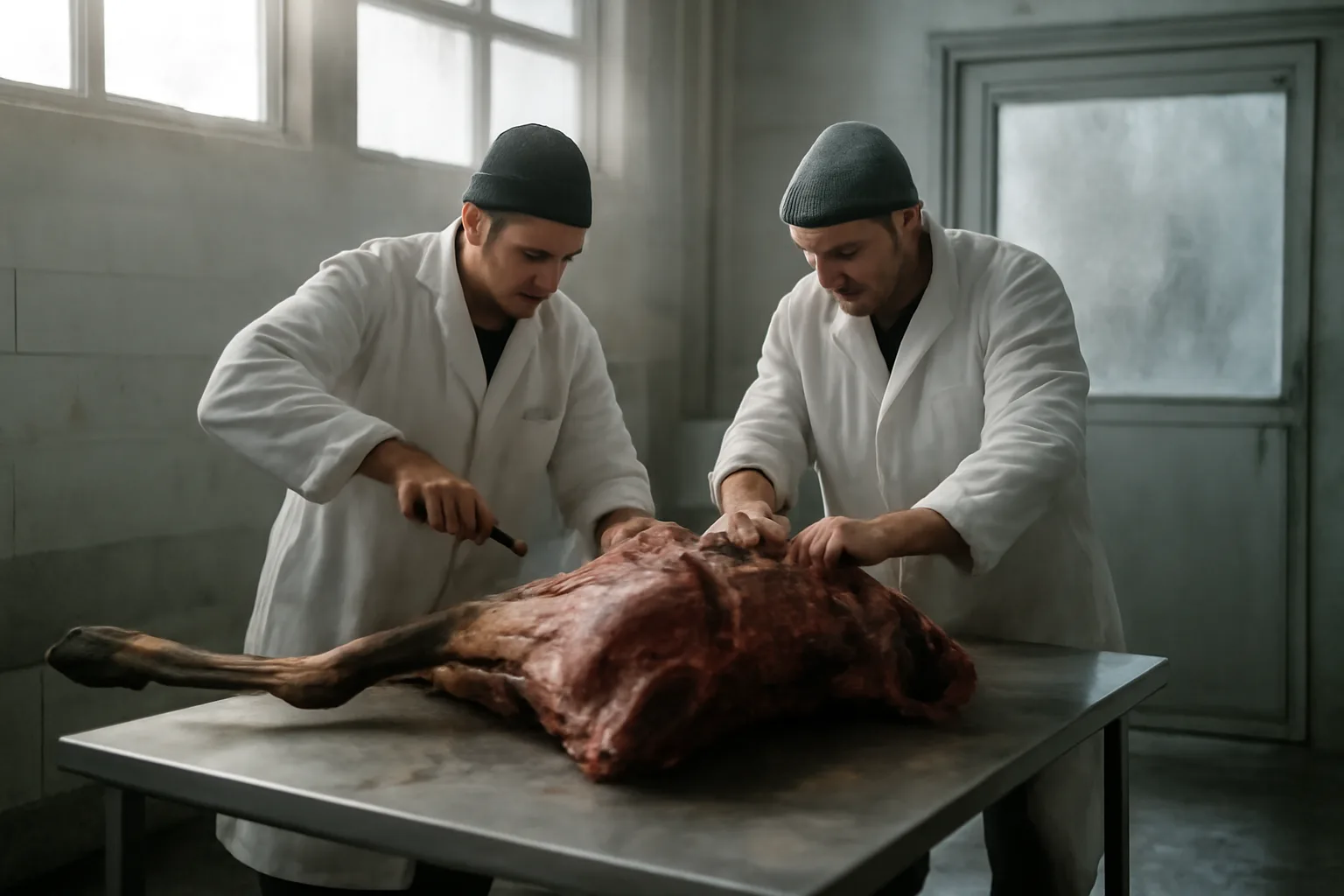
TL;DR
Colorado has no standalone cut and wrap board. Custom shops get a license from the Colorado Department of Agriculture under Title 35, Article 33. Selling meat requires state or USDA inspection and a written HACCP plan. License fees and review times change, so confirm both with CDA. Hunters set turnaround with each shop, and plants fill fast during rifle season.
What board licenses cut and wrap in Colorado?
Colorado has no standalone cut and wrap board. Custom shops are licensed by the Colorado Department of Agriculture, Inspection and Consumer Services Division, under Title 35, Article 33 of the Colorado Revised Statutes.[1] Sell meat and you leave the custom track entirely for CDA meat inspection or USDA FSIS.[6][7]
People keep hunting for a board because other states park this work in a livestock board or a named meat board with its own fee card. Colorado parks it inside CDA. The Commissioner of Agriculture holds the statutory power. You talk to meat inspection staff for the walk-through. You do not wait on a volunteer board night.
That changes how you confirm facts. Random fee tables go stale. Forms get revised. The only packet that counts is the one CDA is using this year. Call them. Ask for the custom processing application and the construction items they actually inspect against.[1][6]
Retail sausage under your own label is not the custom form. That is a grant of inspection, a different inspector, and a written HACCP plan.[5][14]
Local government still sits in the path. County planning signs off on the use. Building and fire sign off on the box. If you sell inspected product over a counter, the county health department runs the retail food license under Colorado retail food rules.[9] CDA does not replace those desks.
Do not start by buying a grinder. Start by asking CDA which license matches the way you take money. Custom work returned to the owner is one lane. Selling cuts is another. Mixing those lanes is how people get shut down.
Do you need a license for cut and wrap in Colorado?
Yes. You need a CDA license to run a custom processing facility in Colorado for other people's animals.[1] Cutting your own animal for your own household is a narrower federal exemption, and it is not a shop. Selling meat takes state or federal inspection, not a custom ticket.[2][3]
The federal custom exemption is narrow on purpose. 9 CFR 303.1 limits custom slaughter and preparation to product "exclusively for use, in the household of such owner, by him and members of his household and his nonpaying guests and employees."[2] The Federal Meat Inspection Act says the same thing in 21 U.S.C. 623.[3]
So the license question is really three questions. Are you cutting for the owner and handing it back? Then you want the custom processing license and you mark the product Not For Sale.[1][4] Are you selling meat? Then custom is the wrong paper. Are you only breaking down your own steer in your own barn for your own freezer? That is not a cut and wrap business.
Wild game is daily work for cut and wrap Colorado shops. You still need the facility license if you are in the custom processing business. CPW rules on tags, proof of sex, and CWD sit on top of the CDA license. They do not replace it.[8][13]
Skip the license and you are running an illegal plant. That is not a gray area. Do not take a friend's elk as a favor in a garage once you are advertising on Facebook. That is how complaints start.
Custom-exempt, state-inspected, or USDA: which path are you on?
Pick one operating lane before you pour concrete. The lane decides the paper, the mark on the bag, and whether you can take money from a stranger for a steak.
Custom-exempt means the animal's owner gets the meat back. You cannot sell it. You mark it Not For Sale. Sanitation and records still matter. Federal reviewers can still walk a custom-exempt operation, and FSIS publishes a custom-exempt review directive for a reason.[4][10][11]
State-inspected means Colorado's meat inspection program. USDA lists state MPI programs that must be at least equal to federal inspection, and Colorado runs one.[7] You can sell inside Colorado under that mark. You still need HACCP and sanitation SOPs.[5][10]
USDA-inspected means a federal grant of inspection. You can sell across state lines. Same HACCP rule in 9 CFR 417.2.[5][14]
| Path | Who licenses it | Can you sell the meat? | Written HACCP (9 CFR 417) |
|---|---|---|---|
| Custom-exempt cut and wrap | CDA under CRS Title 35, Article 33 | No. Owner use only | Not the inspected-plant plan |
| State-inspected | CDA meat inspection (equal-to federal) | Yes, in Colorado | Yes |
| USDA-inspected | USDA FSIS | Yes, interstate | Yes |
Do not build a retail brand on a custom license. People print labels before they have a grant of inspection. Waste of money.
Unsure? Tell CDA the species, the customer (owner vs buyer), and whether product leaves the state. Let them place you. Then build to that.
Inspected plants also live under 9 CFR 416 sanitation. Floors, walls, pest control, potable water, and inedible handling are not optional paint colors.[10] Custom plants in Colorado are judged against CDA's custom rules and the statute, not against your favorite cooler photos.
A dual operation (custom days plus inspected days) is possible in some plants if CDA or FSIS agrees to the separation and the schedule. Do not assume you can grind a customer's cow and your for-sale trim on the same table in the same hour. Ask before you advertise both.
How much does a cut and wrap license cost in Colorado?
CDA sets custom processing license fees on its own schedule, and that schedule moves. I will not invent this year's dollar figure. Confirm the current fee with CDA Inspection and Consumer Services before you write a check.[1][6]
The license fee is not your real cost. Cooler capacity, a floor drain that actually drains, hot water, a door that pests cannot own, and a legal receiving area will dwarf the paper. If you charge by weight, the scale is a commercial device under Colorado weights and measures law. That is a separate CDA desk.[12]
Building out a kill floor you will not staff is a classic first-year waste. Plenty of Colorado shops never slaughter. They take carcasses and game from hunters and other plants. If that is your plan, say so on the application so you are not inspected against a slaughter script you do not run.
County impact fees, blood and inedible handling, and a dumpster contract belong in the budget. So does a CWD sampling setup if you will touch deer and elk in mandatory units.[13]
Price the box, the utilities, and one reliable saw before you worry about the license check. The check is real. It is not the thing that sinks a first year.
How much does cut and wrap cost in Colorado?
There is no official Colorado price for hunter cut and wrap. Shops set their own sheets. They change them. Peak elk weeks look nothing like April.
Nobody publishes a clean statewide average I would trust. The closest you get is calling three plants in your actual county and asking for this season's deer and elk list, including skinning, cape, grind, sausage add-ons, and whether they still take walk-ins. If a website quotes a five-year-old deer special, ignore it.
Book before opening weekend if you need meat back before Thanksgiving. Paying a rush premium because you drove around with an elk in the truck for two days is a waste of money. So is driving two hours to save a little on grind when you will burn that in fuel and a dried-out carcass.
If you are the shop, post the sheet. Date it. Say when you close the book. Colorado hunters will fill a small plant faster than your cooler can turn.
Processor-to-processor beef and hog custom rates are also private. Do not copy a Front Range shop's sausage price in a mountain town with different labor and electric. Price your actual hours.
For the plant itself, the license fee is only the state paper. Construction, refrigeration, a legal scale, and labor are the real number, and they are local. Confirm every state fee with CDA. Confirm every county fee with the county. No national blog has your county's number.
How long does cut and wrap take in Colorado?
There is no legal deadline for how long a Colorado shop has to finish your deer. Turnaround is a private promise. Confirm it in writing when you drop the animal.
Off-season beef for a regular customer can come back in a few days at a slow shop. Combined rifle is a different planet. Some plants stop taking animals. Some quote many weeks. I will not invent a standard number because there is not one, and any post that gives you a statewide day count is making it up.
License review time at CDA is also not something I will invent. Confirm current processing time with the department. No article can promise you an approval date. Build extra calendar into the lease.
Hunters, call before you harvest, not from the field with a downed elk and a full cooler. Plants, put the current queue on the phone message. It cuts the angry Friday night calls.
Weather and power losses add days you cannot bill away. Front Range wind events and mountain outages are not theoretical. If your only freezer sits on one circuit with no alarm, you do not have a timeline. You have a hope.
What paper does CDA want before you open?
Expect a packet, not a vibe. CDA will want an application for the custom processing license, a description of operations, and a facility that can pass a pre-operational look.[1][6]
Bring a simple floor plan. Show product flow from receiving to cut to wrap to freezer. Show inedible the other way. Show toilets and handwash that do not dump into the cut room. Show potable water. If you are on a well, be ready to talk testing. If you are on a septic, be ready for the county.
Records: who owns the animal, what came in, what went out, dates. For livestock, keep the owner identity tight because the meat cannot be sold.[2][3] For game, keep the hunter and tag information the way CPW expects.[8]
Marking is not a style choice. 9 CFR 316.16 says carcasses and parts prepared on a custom basis "shall be marked at the time of preparation with the term “Not for Sale” in letters at least 3/8 inch in height," unless the immediate container is marked the same way.[4] Use ink that stays. Do not get cute with script lettering.
If you sell by weight, get the scale in the weights and measures system before opening day.[12] A bathroom scale is not a commercial device.
Inspected plants add sanitation SOPs, a hazard analysis, and a written HACCP plan under 9 CFR 417.2 before they cut for sale.[5][10] That is not optional homework.
This is the one place a paper kit can save you from staring at a blank binder. CutWrapPath sells a $179 one-time HACCP + Deer-Season Kit at /start if you want templates. It does not replace CDA or FSIS review. If you can write the plan yourself from the CFR, do that and keep the money.
Does wild game change the cut and wrap license in Colorado?
Wild game is why a lot of cut and wrap Colorado plants exist. The custom license is still the license. Game does not get you a free pass, and it does not let you sell elk burger to the public off a custom ticket.[1][2]
CPW Chapter W-2 is the hunting regulation packet you should actually read. Tags, manner of take, and evidence of sex stay with the carcass the way the regulation says, including when the hunter hands it to you.[8] If you cannot match meat to a hunter, you have a problem.
Do not commingle unlabeled game with a customer's beef. Do not borrow trim. That is how you blow the custom exemption.
Want to sell game sausage? Stop. Commercial sale of wild game meat is not the custom path, and it is tightly limited. Confirm any rare exception with CPW and CDA before you print a menu. Do not build a business plan on it.
Intake tickets should name the hunter, the species, the tag or license identifier you were given, and what you agreed to cut. Verbal instructions disappear on a Saturday in October. Write it down.
What do CWD rules do to a Colorado processor?
Chronic wasting disease sits on every deer and elk season in Colorado. CPW runs mandatory testing in listed game management units, and the list can change. Confirm this season's units and submission steps with CPW, not last year's social post.[13][8]
A shop that takes heads or lymph nodes for hunters is doing real work. Budget time, gloves, bags, and a way to keep samples straight. Budget a plan for positive carcasses and specified parts. Landfill and rendering rules are not the same for CWD material as for a routine beef bone barrel. Ask CDA and your hauler what they will actually accept.[6][13]
Do not advertise that you take everything if your dumpster contract says otherwise. That is how you end up with a freezer full of product you cannot move.
Hunters still own their meat unless a test-and-hold setup says otherwise. Know what you promised on the intake ticket. If you hold meat pending a result, say how you will reach the hunter and what happens if they do not answer.
Do not guess the current mandatory units from memory. Print CPW's current list and tape it by the receiving door.
Do you also need a county health license?
A custom-only plant that never sells food to the public is mostly living with CDA. A glass case of inspected steaks, lunch meat, or jerky for walk-in buyers is retail food. That is a county health license under Colorado's retail food establishment rules, including 6 CCR 1010-2 as administered locally.[9]
Two licenses. Two inspectors. Two sink conversations. Plan for it.
Mobile or farmers market sales of inspected meat add another layer (local health plus whatever CDA or FSIS already required). Cottage food in Colorado does not cover meat. Do not try to hide jerky in a cottage food card.
Hand wrapped packages back to the owner who delivered the animal and you are not a deli. Stay in your lane and you stay out of a second inspection program you did not budget.
Zoning is its own fight. A perfect CDA room in a building the county will not allow for meat processing is a very expensive classroom. Get the land-use answer first.
What first-year operations waste money in Colorado?
First year, people overbuy. A second vacuum machine will not save a plant that cannot schedule hunters. A storefront on a highway will not save a custom-only ticket that cannot legally sell a single steak.
Write SOPs you will follow on a Saturday in October, not a binder you will never open. Train whoever answers the phone on what you will not take. Gut-shot warm elk at 4 p.m. Friday. Unlabeled bags. Animals you cannot fit.
Insurance, workers' compensation if you have employees, and a real contact list for custom owners matter more than a new logo. So does a backup freezer plan.
Want inspection later? Design the room so an inspector can walk it. Drains, light, separation. Retrofitting a garage you already finished is the expensive order.
Buying a full federal-style HACCP binder you will never run, while staying custom-only, is usually theater. Inspected plants must have the written plan under 9 CFR 417.2.[5] Custom-only plants still need sanitation and records. They do not need a fake CCP tree to impress a hunter.
Compare notes with how Idaho shops handle the board path if you also cut in that state. Do not assume the forms match.
How does Colorado compare to nearby cut and wrap states?
Colorado is a CDA state, not a livestock-board state. Arizona's cut and wrap board path and California's cut and wrap board path sit in different agencies with different fee rituals. Read those on their own terms.
Game volume is the Colorado twist. Idaho is the closest cousin on elk. Alaska cut and wrap board rules are their own animal because of wild harvest and access. Midwest custom hog work in Illinois will not teach you CWD intake.
Run plants in two states? Keep two mark kits and two record packets. Inspectors do not want to hear that it was legal next door.
Other states in this series are useful only as a reminder that custom never means unregulated. See Arkansas if you are comparing a second location. For another mountain-west contrast, reread the Idaho piece before you copy a form.
Interstate sales require the USDA lane, not a stack of state custom tickets.[14][7]
Where do you confirm Colorado fees, forms, and wait times?
Confirm fees, forms, and any stated review time with CDA Inspection and Consumer Services. Confirm CWD units and sample instructions with CPW each season. Confirm zoning and retail food with the county that will actually inspect you.[6][13][9]
USDA FSIS handles federal grants of inspection and publishes the custom-exempt review process.[11][14] The CFR text is free. Read 9 CFR 303.1, 316.16, 416, and 417.2 if you are going inspected.[2][4][5][10]
Title 35, Article 33 is the custom processing statute you should have in the folder, not a screenshot of someone else's license.[1] Weights and measures is the same department family if you charge by the pound.[12]
CutWrapPath is an independent publisher, not a law firm and not a service company. Use /start only if you want the HACCP + Deer-Season Kit as paper help. The statute and the department still win.
No one here can promise CDA will accept your room or that your elk will be back in two weeks. Anyone who does is selling comfort.
Frequently asked questions
Do you need a license for cut and wrap in Colorado?
Yes, if you operate a custom processing facility for other people's animals. CDA licenses that work under Title 35, Article 33. Processing only your own animal for your own household is a narrower federal exemption, not a shop. Selling meat requires state or USDA inspection, not a custom ticket. Confirm the current application with CDA.
How much does cut and wrap cost in Colorado?
There is no official statewide price. Shops set their own deer and elk sheets, and those sheets move during rifle season. Call three plants in your county for this season's list, including skinning, grind, and sausage. License fees for a new plant also change. Confirm those with CDA. Construction and cooler cost will dwarf the paper fee.
How long does cut and wrap take in Colorado?
There is no legal turnaround. Off-season work can be days in a slow shop. After combined rifle, many plants quote many weeks or stop taking animals. Confirm the date in writing at drop-off. CDA license review time is also not a fixed public number. Confirm current timing with the department. Nobody can guarantee an approval date.
Who is the cut and wrap board in Colorado?
There is no body with that name. Custom processors are licensed by the Colorado Department of Agriculture, Inspection and Consumer Services, under CRS Title 35, Article 33. Selling meat pulls in CDA's meat inspection program or USDA FSIS. County planning and county health still sit on zoning and any retail case.
Can a custom shop sell elk burger to the public?
No. Custom product is for the owner of the animal, plus that household, nonpaying guests, and employees under 9 CFR 303.1 and 21 U.S.C. 623. It must be marked Not For Sale. Commercial sale of wild game is tightly limited. Confirm any rare exception with CPW and CDA before you print a menu.
Do I need HACCP for a custom-only Colorado plant?
A written HACCP plan under 9 CFR 417.2 is required for inspected official establishments, not as a substitute for a custom-exempt license. Custom-only shops still need sanitation, records, and CDA's custom license. Buying a federal-style plan you will never run is usually a waste. If you later sell meat, write the real plan before you cut for sale.
Can I process my own steer without a CDA shop license?
Slaughtering and preparing an animal of your own raising for your own household sits under the federal personal-use exemption, not a public cut and wrap business. Once you cut other people's animals, advertise, or take pay as a facility, you are in CDA custom licensing. When in doubt, describe the exact facts to CDA and ask them to place you.
Do I need a retail food license for custom drop-off only?
If you only return wrapped packages to the owner who delivered the animal, you are mostly in CDA's world. A retail case, lunch counter, or jerky for walk-in buyers is county retail food under Colorado's retail food rules. Cottage food does not cover meat. Ask the county health department before you put a price on a case.
What does the Not For Sale mark have to look like?
9 CFR 316.16 requires custom carcasses and parts to be marked at preparation with Not For Sale in letters at least 3/8 inch high, unless the immediate container carries the same mark. Use ink that stays put. Cute script fails the height rule. Mark it when you prepare it, not at pickup if you remember.
Does CWD testing change processor rules in Colorado?
Yes, in practice. CPW mandatory units and sample steps change. Shops that collect heads or lymph nodes need a chain of custody and a disposal plan for positive or restricted material. Confirm this season's units with CPW. Confirm what your renderer or landfill will actually take before you advertise that you take every elk.
Are commercial scales required for cut and wrap Colorado shops?
If you charge by weight, the scale is a commercial device under Colorado weights and measures law, handled through CDA. Get it in their system before opening day. A household scale is not enough. If you charge flat rates only, ask CDA whether you still need a device license for any scale on the floor.
Can I run USDA inspection and custom work in one building?
Sometimes, if FSIS or CDA agrees to the separation, the schedule, and the marks. Do not grind for-sale trim and a customer's custom cow on the same table in the same hour unless that plan is written and accepted. Ask before you advertise both. Dual ops fail on paper flow more than on saws.
Where do I get the Colorado custom processing application?
From CDA Inspection and Consumer Services, the meat inspection and custom processing program. Do not use a copied PDF from a forum. Ask for the current custom processing license application and any construction guidance they inspect against. Confirm the fee when you request the form. County zoning still comes first.
Does Colorado cottage food cover jerky or sausage?
No. Cottage food does not cover meat. Jerky, sausage, and similar products sold to the public need the inspected path plus whatever retail or market rules apply. A custom-exempt plant cannot sell those items off the custom ticket. If someone told you otherwise, they are wrong. Confirm with CDA and your county health department.
Sources
- Colorado General Assembly, CRS 2023 Title 35 (Article 33, Custom Processing of Meat Animals): Colorado custom processing facilities are governed by Title 35, Article 33, administered through the Department of Agriculture.
- eCFR, 9 CFR 303.1 Exemptions: Custom-prepared meat is limited to use in the owner's household by the owner, household members, and nonpaying guests and employees.
- U.S. House Office of the Law Revision Counsel, 21 U.S.C. § 623: The Federal Meat Inspection Act exempts certain personal and custom slaughter and preparation from the inspection-for-commerce requirements.
- eCFR, 9 CFR 316.16 Custom prepared products: Custom product must be marked Not For Sale in letters at least 3/8 inch high at the time of preparation unless the immediate container is so marked.
- eCFR, 9 CFR 417.2 Hazard Analysis and HACCP Plan: Official inspected establishments must conduct a hazard analysis and develop a written HACCP plan when hazards are reasonably likely to occur.
- Colorado Department of Agriculture, Meat and Poultry Inspection program: CDA Inspection and Consumer Services administers Colorado meat and poultry inspection and related custom processing licensing.
- USDA FSIS, State Inspection Programs: USDA recognizes state meat and poultry inspection programs that must be at least equal to federal inspection; Colorado operates such a program.
- Colorado Department of Public Health and Environment, Retail food regulations and guidance: Retail sale of food, including inspected meat in a case, is regulated as a retail food establishment under Colorado rules administered with local health departments.
- eCFR, 9 CFR Part 416 Sanitation: Inspected establishments must meet federal sanitation performance standards, including facilities, water, and pest control.
- USDA FSIS Directive 5930.1, Custom Exempt Review: FSIS maintains a custom-exempt review process, so custom operations remain subject to federal review even without a grant of inspection.
- Colorado Department of Agriculture, Weights and Measures: Commercial weighing devices used in trade are regulated by CDA weights and measures, separate from the custom processing license.
- Colorado Parks and Wildlife, Chronic Wasting Disease: CPW administers CWD surveillance and mandatory testing by game management unit, which changes processor intake and sampling practice.
- USDA FSIS, Apply for a Grant of Inspection: Selling meat in interstate commerce requires a USDA grant of inspection rather than a custom-exempt license.