Last updated 2026-08-21
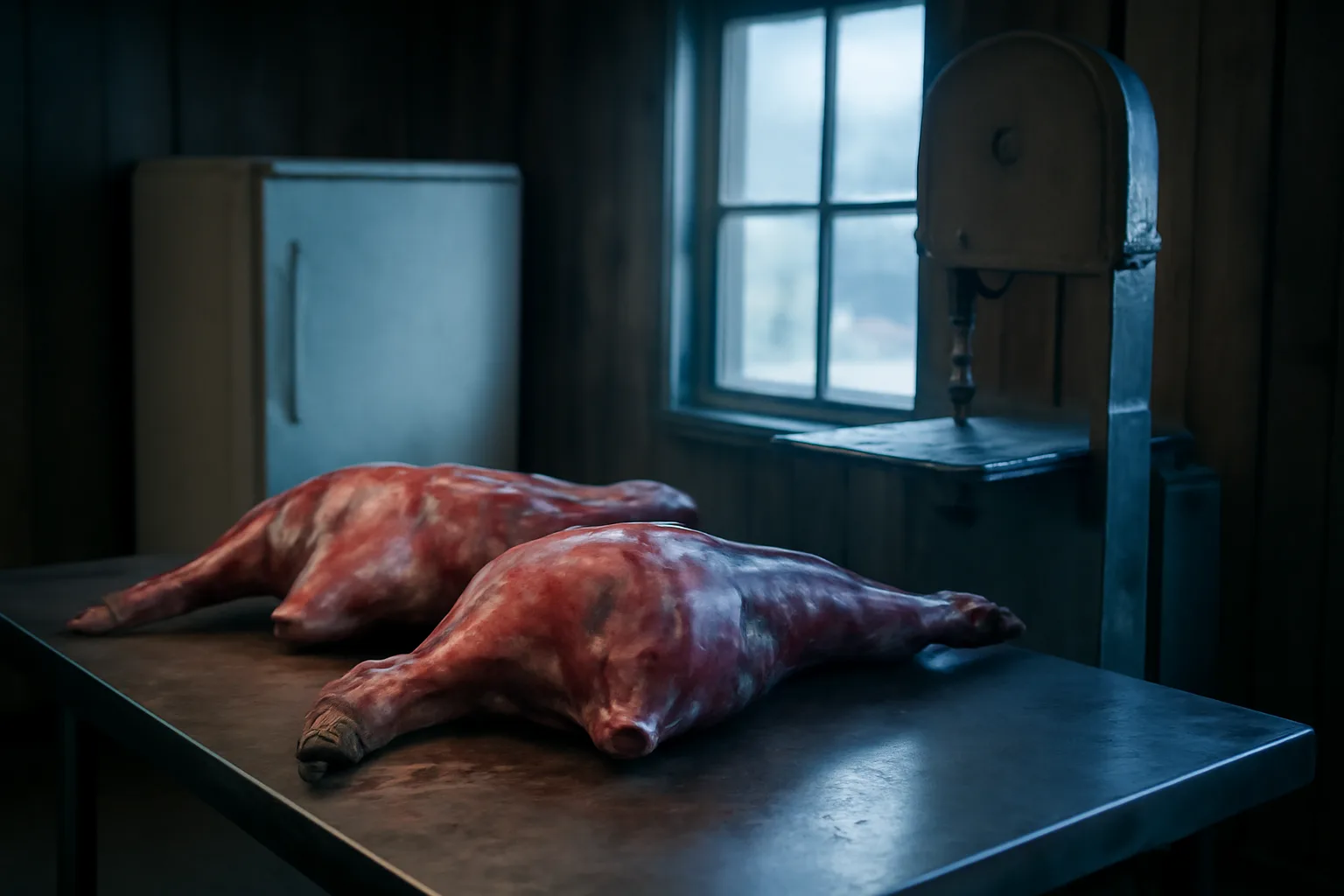
TL;DR
Idaho has no single cut-and-wrap license. Register the business, get a food establishment permit from your public health district, follow USDA custom-exempt rules for owner livestock, and keep Fish and Game tags with wild game. Vacuum wrapping usually needs a HACCP plan. Confirm fees and timing with your district. No one can promise an approval date.
Do you need a license for cut and wrap in Idaho?
Yes. Idaho does not issue one statewide cutter card, but you still need paper before you take the first elk. You need a food establishment permit from your local public health district, a real business filing, and USDA custom-exempt compliance if you cut cattle, sheep, swine, or goats for the animal's owner.[5][6][2]
People keep hunting for a Boise cut-and-wrap board. There isn't one. The work sits under food safety, federal meat law, and game rules at the same time. That split is why Facebook advice ages badly.
If you only wrap wild deer and elk for hunters, your main license is the health-district food establishment permit, plus Idaho Fish and Game possession rules on tags and evidence of sex.[5][7] If you also take a rancher's steer, you step into the Federal Meat Inspection Act custom exemption. That exemption is real. It is also narrow.[1]
21 U.S.C. § 623 says inspection rules do not apply to "the custom slaughter by any person, firm, or corporation of cattle, sheep, swine, or goats delivered by the owner thereof for such slaughter" when the meat is "exclusively for use, in the household of such owner, by him and members of his household and his nonpaying guests and employees."[1]
Read it twice. Owner's household. Not your retail case. Not a farm-stand freezer. Not a Facebook sale.
You still mark livestock packages "Not for Sale." Custom-exempt product has to stay identified that way under 9 CFR 303.1.[2] I would stamp it on the bag and on the invoice. Inspectors and officers both read labels.
Some cities want a local business license. Zoning is always local. Confirm both before you sign a lease. I would not buy a building because a Realtor "thinks meat plants are fine here."
Want the inspected, for-sale path instead? That is a USDA grant of inspection, not custom cut and wrap. Different business. Different money. Different paper. If you are still mapping the category, cut and wrap license in Colorado shows how a nearby hunting state splits the same pile.
How much does cut and wrap cost in Idaho?
Nobody publishes an official statewide startup price for cut and wrap in Idaho. The state does not sell a starter shop. Your real money is the room (cooler, drains, stainless, saws), then permit and entity fees you have to confirm with the health district and the Secretary of State.
I will not invent a current district fee. Districts set their own plan-review and annual permit charges. Call yours. Get the fee sheet in writing. Fees move. Blogs from 2019 are trash for this.
Entity filing with the Idaho Secretary of State is a required step if you want an LLC or corporation. Confirm the current dollar amount on the Secretary of State's fee schedule before you file.[14] An EIN from the IRS costs $0 if you apply on the IRS site.[9]
Idaho Code § 63-3619 sets the state sales tax at 6 percent of the sales price.[3] Whether your cutting fee is taxable is a Tax Commission question. Ask them in writing before you print a price list. Some cities add local option tax. Confirm.
Buildout is where people blow the year. A legal room needs washable walls, floor drains that actually drain, a hand sink that is not your three-comp sink, refrigeration that holds product cold, and a restroom the Idaho Food Code will accept.[5] If the building is a pole barn with a dirt floor, you are not "almost ready." You are in construction.
Used band saws and grinders can be fine if you can take them apart and clean them. Fancy imported gear in year one is often a waste. A cheap vacuum machine that cannot hold a seal is also a waste. Buy the saw and the cooler first.
If you hire anyone, Idaho follows the federal minimum wage. Idaho Code § 44-1502 sets the state minimum wage at the federal floor of $7.25 an hour.[4] You will not staff a deer-season night shift on that number and keep good help. Budget real wages. Workers' compensation is not optional once you have employees.[10]
Insurance is a private quote, not a state fee. Get general liability and property numbers before you take keys. I would not open without it.
Waste of money: a giant retail counter if you are custom-only. You are not selling steaks. You are returning boxes. Another waste is paying for a full inspected-plant layout when you only want hunter work. Build the room you will actually run.
How long does cut and wrap take in Idaho?
There is no statewide clock for cut and wrap in Idaho. Entity filing can be days. Health-district plan review is the real gate, and timing is whatever that district's staff load is this month. Confirm with your district. I will not promise a week or a season.
If your room is already a former kitchen with drains and a working cooler, you move faster than a raw barn. If you need a building permit, add that queue. Septic or wastewater questions add another queue. Nobody honest can stack those into one number.
USDA custom-exempt review is not the same as a grant of inspection. FSIS still expects sanitation and marking under 9 CFR 303.1.[2][12] Do not treat "exempt" as "invisible."
Deer season does not wait for your plan review. If you are aiming at October elk and November deer, start the paper in winter or early spring. That is advice, not a guarantee. I have watched people hang a shingle in September and then sit on an unfinished cooler while the valley's hunters drive past.
Training yourself on the saw is its own timeline. A new cutter who has never broken a quarter will wreck more meat than they bill. Work a season in someone else's plant if you can. Paid tuition. Cheap compared with angry hunters and a ruined bull.
If you are comparing calendars with other states, read how to start cut and wrap in Alaska. Their season pressure looks familiar. Their agencies do not.
What is custom exempt meat processing in Idaho?
Custom exempt is a federal category, not an Idaho nickname. It lets you slaughter or process cattle, sheep, swine, or goats for the owner without federal inspection stamps, if you stay inside 21 U.S.C. § 623 and 9 CFR 303.1.[1][2]
The meat goes back to that owner. You charge for the service. You do not buy the carcass and resell it. That one sentence is the whole business model.
Wild game is not the same statutory box. Deer and elk are not amenable livestock under the Federal Meat Inspection Act. Your health district and Idaho Fish and Game still care. A lot.
Custom exempt still requires sanitary prep, records, and the "Not for Sale" mark.[2] FSIS can review custom operations. The review page is public. Read it before you advertise beef and hogs.[12]
If you mix custom livestock and wild game, write a plan for cooler identity and dirty-to-clean flow so a steer loin does not wander onto a hunter's invoice. I would keep intake logs with owner name, species, tag or brand, in-weight, out-weight, and date. Custom-exempt records are not optional under 9 CFR 303.1.[2]
9 CFR 303.1 requires custom-prepared livestock product to be kept out of the sale stream and handled under the sanitation rules that attach to that exemption.[2] If that feels fussy, retail inspection will feel worse.
Which Idaho agency actually regulates a cut and wrap shop?
Several. That is the annoying honest answer for cut and wrap Idaho work. No single desk owns the whole shop.
Your local public health district issues the food establishment permit and inspects the room under the Idaho Food Code (IDAPA 16.02.19).[5][6] Idaho statute set up seven public health districts to do this local work.[13]
USDA FSIS owns the custom-exempt livestock rules.[2][12] Idaho Fish and Game owns wild game possession, tags, and evidence of sex.[7][8] The Idaho Secretary of State handles the entity.[14] The Idaho State Tax Commission handles tax accounts.[3] The Idaho Industrial Commission handles workers' comp if you have employees.[10]
ISDA matters more if you touch domestic cervidae or livestock disease questions. Do not assume ISDA is your daily inspector for a hunter cut-and-wrap. Confirm if you take farmed elk.
Call in this order: zoning, health-district plan review, then entity and tax. Read the FSIS custom-exempt page before you print a beef price list.[12]
| Paper | Who actually owns it | Confirm with |
|---|---|---|
| Food establishment permit | Local public health district | Your district's current fee and plan-review packet |
| Custom-exempt livestock | USDA FSIS | FSIS custom-exempt review rules |
| Wild game tags and evidence of sex | Idaho Fish and Game | Current big-game rules and IDAPA 13.01.08 |
| Entity filing | Idaho Secretary of State | Current SOS fee schedule |
| Employer compensation security | Idaho Industrial Commission | IIC employer requirements |
Neighbor states split this pile differently. How to start cut and wrap in Colorado and how to start cut and wrap in Arizona are useful contrasts. Do not copy their forms into an Idaho packet.
What facility rules does the Idaho Food Code put on you?
The Idaho Food Code in IDAPA 16.02.19 is the rulebook your health district will walk with a clipboard. You need a permit. You need a room they will accept. You need sinks, temperature control, cleanable surfaces, and a plan for how meat moves from dirty to clean.[5][6]
Idaho Code Title 39, Chapter 16 is the Food Establishment Act. Operating without the required license is the thing you do not do.[6]
I am not reprinting the whole code. Inspectors look at the boring stuff. Hand sink with soap and towels. Warewashing. Hot water. A cooler that is actually cold. No wooden boards that cannot be sanitized. Floors that do not hold blood in cracks.
If you are in a garage on residential septic, ask the district early. Meat plants make strong wastewater. A house tank can fail that load. This is where people get surprised in November, with 40 deer in the booking book and a red tag on the door.
Lighting, pest control, employee restrooms, chemical storage. All of it is Food Code, not "nice to have." Get the plan-review packet. Draw the flow. Dirty carcass in. Trim. Grind. Pack. Cold storage. Pickup. If the arrows cross, redraw.
I would spend money on drains and refrigeration before I spend it on a logo. Inspectors do not grade your vinyl decal.
Do you need HACCP for vacuum wrapping in Idaho?
Usually yes, because vacuum bags are reduced oxygen packaging. The FDA Food Code, which Idaho's food rules sit on, treats ROP as a special process that needs a HACCP plan and tight controls for Clostridium botulinum and Listeria.[11][5]
Your district will tell you exactly what they want. Confirm. Do not guess from a Facebook group in another state.
The Food Code 2022 states, "A FOOD ESTABLISHMENT that PACKAGES TIME/TEMPERATURE CONTROL FOR SAFETY FOOD using a REDUCED OXYGEN PACKAGING method shall control the growth and toxin formation of Clostridium botulinum and the growth of Listeria monocytogenes."[11]
A written HACCP plan is not a poster in the break room. It is hazards, CCPs, limits, monitoring, corrective actions, records, and verification. For vacuum-packed raw meat that stays refrigerated and carries a discard date, many jurisdictions follow Food Code § 3-502.12.[11]
If you only wrap in freezer paper and skip vacuum, you may dodge the ROP chapter. Plenty of old plants still paper-wrap. Hunters complain. Your call.
This is the one place a template saves time. CutWrapPath sells a $179 one-time HACCP + Deer-Season Kit at /start if you want a starting draft. Your district still has to accept the plan. No kit replaces that conversation.
I would not pay a consultant a giant fee for a custom-exempt hunter shop on day one. I also would not vacuum-pack without a written plan in the file.
What Idaho Fish and Game rules hit a processor?
You are holding other people's wildlife. Tags, permits, and evidence of sex stay with the animal until processing follows the current rules.[7][8] That is not courtesy. That is the job.
Idaho Code § 36-409 is the tag and permit statute. Hunters show up missing tags. Your job is to refuse the animal, not to "fix it in the back."[7]
IDAPA 13.01.08 is the big-game taking rule chapter. Read the current seasons and rules book too, because evidence-of-sex and transport language lives in both the standing rules and the annual booklet.[8] Those booklets change. Confirm the year you are in.
Waste of game is its own problem. Idaho Code § 36-502 addresses waste of wildlife. If you ruin a whole elk through sloppy cooling, you have a hunter problem and potentially a legal one.[15]
Keep a game log. Name, license, tag number, species, date in, date out. If an officer walks in, you want that book, not a pile of sticky notes.
Do not accept out-of-state carcasses without reading the current CWD and import rules. Those change. Confirm with Fish and Game, not with a group chat.
I would post a one-page intake checklist at the door. Tag. Evidence of sex. Owner name. Phone. Cool the animal before it hits your saw. Most fights start at intake, not at the grinder.
How do you register the business itself?
File an entity with the Idaho Secretary of State if you want the liability box of an LLC or corporation. Idaho's Business Organizations Code sets the filing rules, including Idaho Code § 30-21-201 on entity filings.[14]
Sole props can operate under a personal name. I still want the LLC if there is a band saw and a customer with a lawyer. Confirm the current filing fee on the SOS schedule. I am not printing a number that can move.[14]
Get an EIN free from the IRS if you are an entity or have employees.[9] Do it on the IRS site. Do not pay a random portal for a free form.
Register tax accounts with the Idaho State Tax Commission if they tell you that you must. Confirm sales-tax handling on service fees, because Idaho Code § 63-3619 is about retail sales, and custom cutting is a service fact pattern.[3]
City business license: maybe. County: maybe. Call the clerk. Bank account in the business name. Separate it.
Name search first. "Mountain Meat" is taken in every valley. Leave room on the sign for "custom only" so nobody thinks you are a grocery.
What insurance and employer paper do you actually need?
If you have employees, workers' compensation security is required under Idaho law, including Idaho Code § 72-301.[10] That is not a nice-to-have rider.
Unemployment insurance sits with the Idaho Department of Labor once you have covered workers. Confirm thresholds with Labor. I will not invent a wage trigger.
Idaho Code § 44-1502 tracks the federal $7.25 floor.[4] Pay more if you want people to come back after the third all-nighter of deer season. I-9s, W-4s, and labor posters are the boring federal pile. Do them anyway.
General liability and commercial property: get quotes. Product liability if your insurer will write a custom plant. Some will not. Shop early.
A waste of money: five flavors of cyber coverage before you have a website. Buy the meat-plant stuff first. If you stay solo, you still want health coverage for your own hands. A saw does not care.
Put the policy address on the same building the district inspects. Split locations make claims ugly.
Can you sell the meat you cut in Idaho?
Not the custom product. Custom-exempt livestock meat is for the owner's household. It is marked "Not for Sale."[1][2] Wild game is the hunter's animal. You return it. You do not put elk burger in a farmers market booth.
If you want to sell beef by the cut, you need inspected source product and a retail setup your district accepts. Buying boxed primals from an inspected plant and cutting them for retail is a different conversation than custom cut and wrap. Confirm with the district. If you want to slaughter for sale, that is FSIS grant-of-inspection territory, not a custom exemption.[12]
Mixing the two lines in one cooler without a tight plan is how people lose both businesses. I would rather run a clean custom shop than a confused hybrid.
Idaho Code § 63-3619 sets a 6 percent state tax on retail sales.[3] Retail meat is a tax and labeling world. Custom service is a service world. Keep the invoices honest.
California's paper pile is heavier if you ever compare notes. How to start cut and wrap in California is the long version of that warning. Cut and wrap license in Arizona is closer to a desert-state contrast.
What should you do first if you are starting this year?
Call zoning. Then request the food establishment plan-review packet from your public health district. Then walk the room with a tape measure. Do not buy a giant vacuum line before the district says the drains work.
Write the product list: wild game only, or game plus custom beef and hogs. That choice changes USDA exposure.[1][12] Game-only is simpler paper. Mixed plants make more November revenue and more compliance work. Pick on purpose.
Price your cutting list against shops in your valley, not against Instagram. Call them as a customer. Ask for deer boneless and elk sausage dates. You will learn the market in an hour.
Build the HACCP and ROP draft if you will vacuum.[11] File the entity and EIN when the site is real, not when the idea is fun.[14][9] Hire help only when the book is full. Season one is feast and famine.
I would rather open late with a cold cooler than open early and dump warm quarters on the floor. Deadlines you invent are not district deadlines.
If you want another mountain-state paper path, cut and wrap license in Alaska is a useful read after this one.
What paper do you keep once the shop is open?
Intake logs. Temperature logs. Sanitizer concentration. Corrective actions. Custom-exempt records required by 9 CFR 303.1.[2] Game tag notes under Idaho Code § 36-409 and IDAPA 13.01.08.[7][8]
Invoices that say custom service, owner name, and "Not for Sale" on livestock. Employee illness policy. The Food Code cares if someone with vomiting is grinding burger.[5]
I would keep cooler thermometers you actually look at, not ones that died years ago. Write the morning temp. Write the afternoon temp. Boring wins arguments.
Renew the food permit on the district's cycle. Confirm the date. Late renewal is a self-inflicted wound. Confirm every variable fee with the board that bills you. CutWrapPath is an independent publisher, not a law firm and not a service company. The HACCP + Deer-Season Kit is at /start if you want a draft packet. Your district and FSIS still have the last word.
Frequently asked questions
Do you need a license for cut and wrap in Idaho?
Yes, but not one statewide cutter license. You need a food establishment permit from your public health district, plus USDA custom-exempt compliance if you process cattle, sheep, swine, or goats for the owner. Wild game also brings Idaho Fish and Game tag rules. Confirm the current permit with your district before you take animals.
How much does cut and wrap cost in Idaho?
There is no official statewide startup price. Buildout (cooler, drains, saws, sinks) is the real bill. District plan-review and permit fees vary, so confirm them locally. An IRS EIN is $0. Idaho state sales tax is 6 percent on retail sales under Idaho Code § 63-3619. Do not use old blog fee lists.
How long does cut and wrap take in Idaho?
No statewide timeline exists. Entity filing can be quick. Health-district plan review and any building or septic work set the pace. Confirm current review load with your district. I would start paper in winter if you want deer season, but that is not a promise. Ready rooms move faster than raw barns.
Is there a state cut and wrap board in Idaho?
No. Idaho does not run a dedicated cut-and-wrap licensing board. Food permits come from the local public health district under the Idaho Food Code. Livestock custom work sits under USDA FSIS custom-exempt rules. Wild game sits with Idaho Fish and Game. Call those offices, not a board that does not exist.
Can I process deer in my home kitchen in Idaho?
Not as a public cut-and-wrap business. A food establishment permit expects a room the district will accept under IDAPA 16.02.19, with the sinks, finishes, and flow they inspect. A home kitchen used for family deer is a different fact pattern than taking paying hunters. Ask your district before you advertise.
Do I need USDA inspection to cut a rancher's steer?
Not if you stay inside the custom exemption in 21 U.S.C. § 623 and 9 CFR 303.1: owner's animal, owner's household, marked Not for Sale, sanitary custom operation. You do need USDA inspection if you want to sell that beef. Confirm custom-exempt review expectations on the FSIS custom-exempt page.
What does Not for Sale mean on custom meat?
It means the livestock product cannot enter commerce as a sale item. Custom-exempt beef, pork, lamb, or goat goes back to the owner for household use. 9 CFR 303.1 requires that custom-prepared product stay out of the sale stream and be identified that way. Stamp the bag and the ticket.
Which public health district do I call?
Idaho has seven public health districts. Your shop address decides which one issues the food establishment permit. Use the Idaho Department of Health and Welfare district list, then request that district's plan-review packet. Do not mail forms to a district that does not cover your county.
Can I advertise elk snack sticks for sale?
Not from custom wild game you cut for hunters. That elk belongs to the hunter. Selling snack sticks is a different inspected, labeled, and permitted product line. If you want a retail meat item, talk to your health district about inspected source product. Custom cut and wrap is a service, not a store.
Do I pay Idaho sales tax on cutting fees?
Idaho Code § 63-3619 sets a 6 percent state tax on retail sales. Custom cutting is a service fact pattern, and taxability is a Tax Commission call. Some cities add local tax. Ask the Commission in writing before you print prices. Do not copy another shop's register setup and hope.
What if a hunter shows up with no tag?
Refuse the animal. Idaho Code § 36-409 is the tag and permit statute, and you should not "fix it in the back." Ask for the tag and required evidence of sex under current Fish and Game rules. Write the refusal in your intake log. Officers prefer a clean no to a creative yes.
Can I freeze and hold meat for months?
You can hold custom product for the owner if your cooler and freezer actually stay cold and your district accepts the plan. Vacuum-packed raw meat brings ROP and HACCP duties under the Food Code. Put a discard or pickup date on the bag. Confirm hold-time expectations with your district, not with a rumor.
Do I need a variance just to grind burger?
Plain grinding of raw meat for the owner is usually a standard process, not ROP. Vacuum sealing that burger often is the special process. Confirm with your district. If you only paper-wrap grind, you may stay out of the ROP chapter. If you bag it under vacuum, budget a HACCP plan.
How does Idaho compare to other states for this paper?
Idaho uses local health districts plus federal custom-exempt rules, not a standalone cutter board. Colorado, Arizona, Alaska, and California split agencies differently and should not be copied form-for-form. Use those state guides for contrast, then file Idaho paper with Idaho offices. Confirm every fee locally.
Sources
- U.S. Code 21 U.S.C. § 623 (Federal Meat Inspection Act custom exemption): Custom slaughter and preparation of owner-delivered cattle, sheep, swine, or goats for the owner's household is exempt from FMIA inspection requirements.
- eCFR 9 CFR 303.1 Exemptions: Custom-exempt livestock operations must meet the sanitation, record, and not-for-sale conditions in 9 CFR 303.1.
- Idaho Code § 63-3619 Amount of tax: Idaho imposes state sales tax at 6 percent of the sales price on retail sales.
- Idaho Code § 44-1502 Minimum wages: Idaho's minimum wage tracks the federal FLSA floor in 29 U.S.C. § 206(a)(1), which is $7.25 an hour.
- IDAPA 16.02.19 Idaho Food Code: Idaho food establishments are regulated under the Idaho Food Code in IDAPA 16.02.19.
- Idaho Code Title 39, Chapter 16 Food Establishment Act § 39-1603: Idaho's Food Establishment Act requires a license to operate a food establishment.
- Idaho Code § 36-409 Tags, Permits, Certificates: Idaho big-game possession depends on the tag and permit rules in Idaho Code § 36-409.
- IDAPA 13.01.08 Rules Governing the Taking of Big Game Animals: Idaho big-game taking, evidence, and related hunter rules are in IDAPA 13.01.08.
- IRS Apply for an Employer Identification Number (EIN) Online: An EIN can be obtained at no charge through the IRS online application.
- Idaho Code § 72-301 Security for payment of compensation: Idaho employers must secure workers' compensation payment under Idaho Code § 72-301.
- FDA Food Code 2022, § 3-502.12 Reduced Oxygen Packaging: Vacuum / reduced oxygen packaging of TCS food requires controls for C. botulinum and L. monocytogenes under Food Code § 3-502.12.
- USDA FSIS Custom Exempt program page: FSIS publishes custom-exempt review expectations for operations that process livestock for the owner without a grant of inspection.
- Idaho Code § 39-408 public health districts: Idaho law establishes seven public health districts that handle local public health functions including food establishment work.
- Idaho Code § 30-21-201 Entity filing requirements: Idaho business entities file under the Business Organizations Code entity-filing rules, including Idaho Code § 30-21-201.
- Idaho Code § 36-502 Waste of wildlife: Idaho Code § 36-502 addresses unlawful waste of wildlife, which can matter if a processor ruins game through mishandling.